

6-Week Skills for Managing Depression
Over six supportive weeks, this course helps you build practical, evidence-informed skills to ease depressive symptoms and strengthen daily well-being. ...
Show more
Course details
Lectures
6
Assignments
2
Quizzes
2
Basic info
- Title: Managing Depression: A 6-Week Skills Program
- Duration: 6 weeks with weekly modules and daily micro-practices (about 20–30 minutes/day)
- Format: Short video lessons, printable/fillable worksheets, guided audio practices, and mood-tracking prompts
- Approach: Evidence-based strategies (CBT, behavioral activation, mindfulness, sleep and lifestyle supports); educational and not a substitute for professional care
- Outcomes: Reduce avoidance, challenge unhelpful thoughts, increase meaningful activity, improve sleep/energy, and create a personalized maintenance plan
Course requirements
- Time commitment: 20–30 minutes per day, 5 days per week, plus a weekly reflection
- Tools: Internet-connected device, PDF reader or printer, and a journal or note-taking app; headphones recommended
- Participation: Willingness to practice skills between lessons and track mood, sleep, and activity
- Safety: Not for immediate crisis; have a personal support plan and seek licensed help if symptoms intensify
Intended audience
- Adults experiencing mild to moderate depressive symptoms or persistent low mood
- Individuals seeking structured, skills-based self-help or an adjunct to therapy
- People recovering from a depressive episode who want relapse-prevention strategies
- Caregivers or supporters who want to understand evidence-based mood-support tools
- Not intended for those in immediate crisis or requiring intensive or emergency care
Popular courses

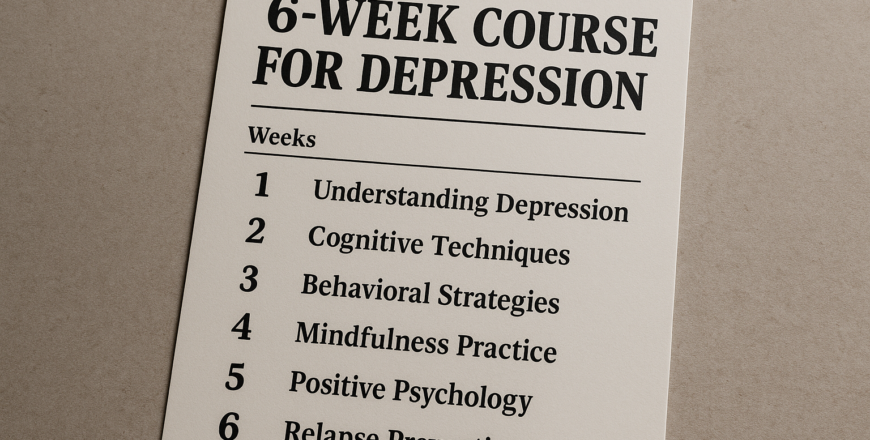
- Description
- Curriculum
- FAQ
- Reviews
- Grade
6-Week Program to Help with Depression
This skills-based course offers gentle structure, evidence-informed tools, and small daily steps. It is educational and not a substitute for professional care. Consider sharing your plan with a clinician or trusted person, and adapt the pace to your energy and life context.
If you ever feel at risk of harming yourself or others, seek immediate help: call your local emergency number or go to the nearest emergency department. If you’re in the United States, you can call or text 988; in the UK or ROI, Samaritans: 116 123; in Australia, Lifeline: 13 11 14.
How to Use This Course
- Time: 20–30 minutes daily, plus a weekly review (15 minutes).
- Track: Rate mood (0–10) and energy each day; note sleep, movement, and meaningful actions.
- Materials: Notebook or app, timer, comfortable clothes for light movement.
- Mindset: Small, kind, consistent steps over intensity or perfection.
Week 1: Stabilize and Notice
- Goals: Create anchors for sleep, movement, and meals; build awareness and safety.
- Daily: Morning light (10 min), gentle movement (5–10 min), one nourishing meal, evening wind-down (30 min, screens off).
- Skills: 5-4-3-2-1 grounding; paced breathing (inhale 4, exhale 6) for 3 minutes.
- Task: List 20 pleasant/meaningful activities (any size). Start tracking mood and triggers.
- Reflect: What helps even a little? What drains me?
Week 2: Activation and Energy
- Goals: Do small, doable actions despite low mood; rebuild momentum.
- Daily: Schedule 3 ABC actions (Achievable, Brief, Controllable), e.g., 2-minute stretch, step outside, tidy one surface.
- Skills: Opposite action—take one tiny step toward what matters when urges say “avoid.”
- Social: One micro-connection (text hello, smile at a neighbor, brief call).
- Reflect: Which actions improved mood or energy by 1 point?
Week 3: Thoughts and Self-Talk
- Goals: Notice unhelpful thoughts; practice balanced alternatives.
- Daily: 1-sheet thought record (situation, automatic thought, evidence for/against, balanced thought, next step).
- Label traps: All-or-nothing, mind reading, catastrophizing, shoulds.
- Skills: “Name it, reframe it, do it”—identify, craft a kinder thought, take a small action.
- Reflect: How does tone of self-talk affect action and mood?
Week 4: Mindfulness and Emotion Skills
- Goals: Build present-moment awareness and emotional tolerance.
- Daily: 10-minute anchor practice (breath, sounds, or body scan). Gently return when the mind wanders.
- Skills: RAIN (Recognize, Allow, Investigate, Nurture); urge surfing (ride urges like waves for 90 seconds).
- Values: Identify top 5 values; choose one tiny action aligned with a value.
- Reflect: What shifts when I respond rather than react?
Week 5: Relationships and Support
- Goals: Increase safe connection; ask for what you need.
- Daily: One reach-out; two gratitude messages this week.
- Skills: DEAR (Describe, Express, Assert, Reinforce) for clear requests; self-compassion break (mindfulness, common humanity, kindness).
- Boundaries: Define one “no” and one “yes” that protect energy.
- Reflect: Which connections feel nourishing? What’s one way to deepen them?
Week 6: Consolidate and Plan
- Goals: Keep what works; prepare for dips.
- Review: Note your top 5 helpful habits and signs of progress (even small).
- Plan: Early-warning signs list; “bad-day plan” (move 10 min, fresh air, simple meal, one connection, early wind-down).
- Maintain: Choose 3 keystone habits; set 2–3 SMART goals for the next month; create a gentle reward.
- Reflect: What will keep this sustainable and kind?
Weekly Check-In
- What helped most? What was hard?
- One thing to keep, one to tweak, one to drop.
- Mood/energy trend and next small step.
Weeks 1–3: Understanding Depression and Building Daily Habits
-
1
 What Is Depression and How This Course WorksBy the end of this lesson, you’ll be able to explain what depression is (and isn’t), distinguish it from everyday sadness, and recognize key symptoms, risk factors, and myths. You’ll also learn how the course is structured—how to navigate modules, complete activities and check-ins, track your progress, and access support resources—so you can set clear goals and get the most from each session.
-
2
 Setting Safe Goals and Tracking MoodStudents will learn to set meaningful, realistic, and safe goals using the SMART framework and healthy boundaries that support well-being. They’ll practice simple mood-tracking techniques (journals, apps, mood charts) to spot patterns, connect feelings with progress, and reflect on triggers. By the end, they’ll use these insights to adjust goals, boost motivation, and choose supportive coping strategies or seek help when needed.
-
3
 Daily Mood and Activity Log: Weeks 1–3
-
4
 Guided Breathing and Grounding PracticeIn this lesson, students will learn step-by-step breathing patterns and grounding exercises to calm the body and sharpen focus. They’ll practice noticing sensations and thoughts without judgment, using simple cues to return attention to the present moment. By the end, learners will build a short, repeatable routine they can use anytime to ease stress and regain balance.
-
5
 Foundations Review
Weeks 4–6: Skills, Connection, and Moving Forward
-
6
 Skills Practice: Behavioral Activation PlanningThrough hands-on practice, students will learn to convert personal values into realistic, mood-boosting activity plans using Behavioral Activation. They will select and schedule meaningful activities, break them into manageable steps, anticipate and problem-solve barriers, and track mood and progress to refine their plans over time.
-
7
Cognitive Skills: Noticing and Reframing Unhelpful ThoughtsStudents will learn to spot common unhelpful thought patterns and understand how these thoughts shape emotions and choices. Through guided practice, they will use simple cognitive restructuring techniques to challenge distortions and reframe them into more balanced, realistic self-talk. By the end, learners will be able to pause, reflect, and apply these skills to everyday situations.
-
8
Behavioral Activation Plan: Weeks 4–6 Implementation and Reflection
-
9
Sleep and Self-Compassion Wind-DownIn this lesson, you’ll discover how self-compassion can reduce nighttime stress and improve sleep quality. You’ll practice a gentle wind-down routine—such as soothing breathwork, mindful body scanning, and compassionate self-talk—to calm the nervous system and quiet rumination. By the end, you’ll craft a personalized bedtime ritual to sustain healthier, more restful sleep.
-
10
Skills Integration Review
What is the goal and structure of a 6-week course to help with depression?
Provide a supportive, skills-based program using evidence-informed practices. Outline: Week 1 orientation and safety; Week 2 behavioral activation; Week 3 cognitive skills; Week 4 sleep, movement, routine; Week 5 mindfulness and self-compassion; Week 6 relationships and relapse-prevention plan. Not a substitute for professional care.
What weekly activities and materials should the course include?
Daily mood tracking, activity scheduling tied to values, brief movement, sleep routine setup, thought records, mindfulness/relaxation, self-compassion exercises, and social connection tasks. Include short lessons (10–15 minutes), guided practice (15–20), and reflective homework. Offer printable worksheets and optional peer check-ins.
How can we measure progress and adjust the 6-week course?
Use a simple weekly rating (e.g., PHQ-9 or 0–10 mood, energy, sleep) plus activity completion. If progress stalls, reduce load, break tasks smaller, or repeat a week. If symptoms worsen, daily functioning drops, or suicidal thoughts appear, pause the course and contact a licensed clinician immediately.
Who is this course for, and what safety guidelines apply?
Designed for adults with mild to moderate symptoms. Not for emergencies or medical crises. Encourage participants to consult a healthcare professional before starting, continue prescribed care, and create a safety plan (warning signs, coping steps, supports). In any crisis or suicidal intent, seek urgent local help.
Please, login to leave a review